By David, VA3UDA
Over the course of May 2026 there have been several notable announcements and events related to the Amateur Radio community that are worth at least a footnote for my column, including:
- Ottawa Amateur Radio Club Monthly Meeting on May 13th, which had some thirty participants attending a meeting involving several presenters who discussed various topics from latest updates in the ham radio world to club policies. Click here to read the OARC Monthly Meeting – May 2026 – Report.
- The Marlborough Forest trail hiking hosted on the weekend of the 8th and 9th in which several radio operators assisted Scouts Canada by sending updates and whereabouts for upwards of two-hundred Scouts and Venturers
- A duo scouting event at Camp Traill and Apple Hill on the 23rd in which both sites hosted various activities ranging from fox hunts to morse code instruction for several hundred scouting youths from across Eastern Ontario and Western Quebec
There were also independent fox hunts that took place across the region this month, in addition to a two-day course that took place at the Algonquin College campus on the 26th and 27th of May.
Upcoming events during the month of June include further scouting activities at Apple Hill scheduled for the long-weekend of June 23rd, as well as further courses and classes in radio operation and antenna building scheduled throughout the month at the Ottawa Amateur Radio Club among other organizations. Readers can visit the OARC website for more information about the Club’s plans.
HISTORICAL TRIVIA
While the story of the infamous sinking of the RMS Titanic – made all the more iconic as a pop-culture icon, following the release of the 1997 film by James Cameron – is remembered today for its controversial policies surrounding lifeboats and ice warnings, few people would closely associate the event as one that triggered a groundbreaking breakthrough in the field of ham radio.
On May 13, 2026, a million hours had elapsed since the sinking of the RMS Titanic in the North Atlantic during the early morning hours of April 15, 1912, in which some fifteen-hundred passengers and crew members perished in one of the worst peacetime maritime disasters in modern history.
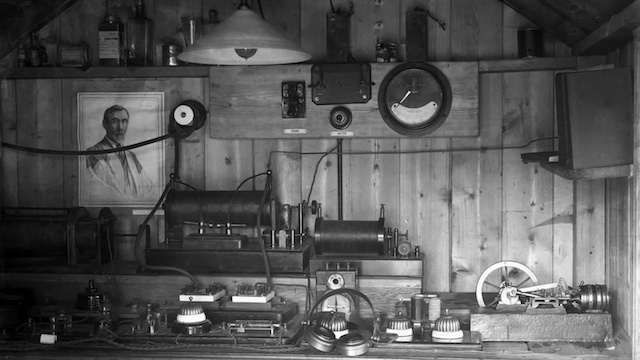
Unbeknownst to those aboard the doomed liner, a twenty-four-year-old disabled man living in the English village of Caerphilly some 5,000 kilometres away was listening attentively to the distress calls SOS calls. This was Arthur “Artie” Moore, a pioneer and inventor in
the ham-radio field who reported the events as they were happening to local law enforcement, but was not believed at the time. Perhaps it was less the concept of being able to receive communication from such a geographical distance, but rather, the thought of a ship that so many regarded as “practically unsinkable” could be so easily undone by an iceberg on her maiden voyage. After all, Moore was also the same radio operator who, a year earlier, had been able to decipher the Italian declaration of war against Libya, located nearly 2,000 kilometres away – a much smaller distance than from his radio shack to the site where the Titanic would founder, but still a very impressive feat for its time period.
In 1912, it was reported that the longest distance for telephone calls had been made between the cities of Denver and New York City, located some 2,400 kilometres apart. Moore’s ability to pick up clear signals from the Titanic at more than twice that distance made it the longest distance signal to ever be deciphered in detail at the time. This feat so impressed Guglielmo Marconi that the inventor of (wireless) morse code soon paid a personal visit to Moore and hired him
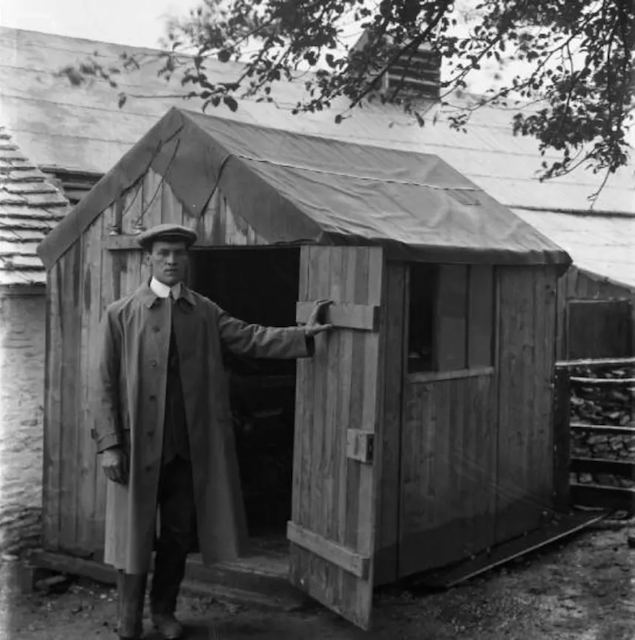
to work as an employee at his Marconi Wireless Telegraph Company. Another interesting tidbit behind this tale is that this technological breakthrough may never have been realized during the spring of 1912 had the ship’s operators, Jack Phillips and Harold Bride not discarded Marconi Company policy at the time, which prohibited fixing the device while at sea – and set about repairing the wireless telegraph machine; accomplishing their goals only hours before the collision, thus saving hundreds of lives and securing Arthur Moore a place in the history of Amateur Radio.
Last Updated on 2026-10-16 by AdminOARC